


I used to be convinced that I would run out of words - that I’d find I’d reached the end, written the best I could write, and that was it, no longer a writer. Or maybe proof that I never was.
If you love to write, perhaps you can relate.
As far as a writing practice goes, I’ve never had much of one. Just an opening of a blank page and waiting for the words to come. Or fearing even opening the page to begin with…
I recently came across the writing practice of copywork, which has been helping me stay closer to writing, especially on the days I’m convinced I’ve reached the end of my own words.
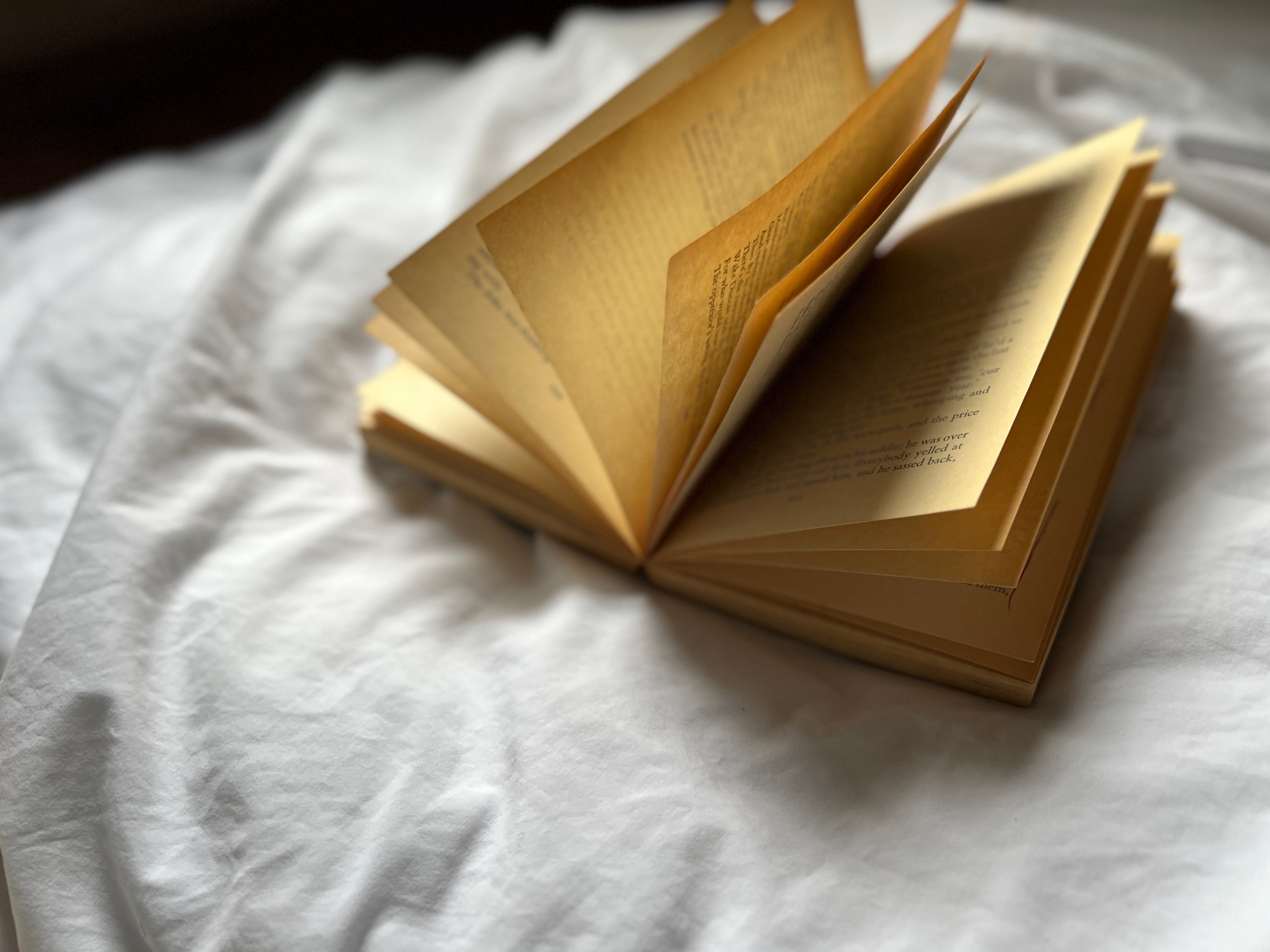
What is copywork?
Copywork - not to be confused with copywriting - is a writing practice where you take a book, or even just a passage, of one of your favourite authors’ works, and copy it down word for word. Fiction or non-fiction, handwritten or typed, although some people say handwriting will help you absorb it better - whatever suits you best, or more importantly, the process with the fewest blocks for you.
It’s an exercise to get inside the minds of your favourite writers. A way to learn about sentence structure, improve your vocabulary, and sharpen your grammar. To move your brain.
Joan Didion talked about this practice in an interview with The Paris Review in 1978, when asked if any writer influenced her more than others:
I always say Hemingway because he taught me how sentences worked. When I was fifteen or sixteen I would type out his stories to learn how the sentences worked.
And Hunter S. Thompson was known to copy down F. Scott Fitzgerald’s The Great Gatsby multiple times, to “see what it would feel like to write a great novel.”
Copywork - stealinwork?
As someone who has always hated the thought of copying another artist’s work and consciously tries not to follow many accounts on social media, I was a bit hesitant about this concept. I’ve always been wary about the slippery slope of inspiration - how easy it is to look at others too much and find you’ve lost yourself, likely from a lack of self-trust. I’m conscious to hold and harness my own voice; it’s something I think about quite a bit.
But the more I wondered about it, the more I realised I’m essentially doing copywork with my daily piano practice. Every single day! Going over and over the same notes that someone else came up with. Putting the hat of another musician on and trying their mind out for myself.
So, after relieving myself of any more plagiarism paranoia, I decided to give copywork a go - I took some of my favourite authors off the shelf, and began copying them down.
My experience with copywork so far
When you think about it, copywork is basically reading, but more deliberately. We know that to improve your writing, you need to be reading more. How much of a writer can you really be if you’re barely ever reading? It’s like reading, but close-up.
The first time I tried it, I noticed that I sometimes mindlessly copied something without it sinking in. Being a fast typist has its downsides. To prevent this from happening, I speak a line out loud and then write it down - it feels like I’m digesting it more that way.
I sometimes unintentionally fill in sentences with a couple of my own words. Like an internal autocorrect kicking in. When I stop and notice, it feels like a mini lesson - What made me use those words? Why did the author use these other words instead? No right or wrong, just an observation on how two different people choose to word things. It gets my brain going, I notice a few of my habits and learn something new.
Copywork means I’m exercising writing even when I don’t feel like it. This feels like such a relief for me. I can be in the practice of words, even on the days when I don’t feel like facing my own.
I’ve noticed my confidence has increased in the moments when I’m writing my own words. Sometimes I’m more succinct than usual, which I’ve wanted to improve on for a while. I’ve started to see the result of what I’ve been absorbing through copywork so far, even if I can’t quite put my finger on where exactly it came from.
I haven’t found that I’ve unintentionally plagiarised anyone’s words! (Yet?!) Phew.
Aside from copywork, the only other writing exercise I sometimes do is freewriting, where you write down a stream of thoughts, and I’ve realised that copywork and freewriting are kind of like two opposite ends of the scale:
Freewriting - getting everything out that’s inside, all the words, whatever comes up in your brain. No definition, no shape, no boundaries. An emptying.
Copywork - a clear beginning, middle, and end. Visible. Coherent. Intentionally letting someone else’s words into your brain. A filling.
And perhaps somewhere in the middle, between emptying and filling, are the words I put out into the world.
So, take a book off your shelf, give yourself 15 minutes, and explore some words that are already in the world by copying them down.
And if you’re worried about losing your voice, just remember that copywork is simply a tool to learn ways to shape words, not learning what to think.
The alphabet is available to all of us. I don’t have any words that aren’t available to you. The letters - just like the music notes in my daily piano practice - are already here. We don’t need to come up with new ones for the dictionary - just find the ones that work for us.
So, experiment. Play. The words are waiting.
Thanks for reading today’s assortment of words!
Now tell me, are there any writing exercises that work for you? And have you tried copywork before? Send me some of your own words in a comment below, I’d love to hear from you!

Interesting idea - think I'll give it a go! I find many of the prompts in Writing Down the Bones by Natalie Goldberg can stir things up for me.